Eyeing Balcones Park for an ADU, a thoughtful addition, or a smart remodel that builds long-term value? You are not alone. With large, treed lots and close-in access to northwest Austin amenities, this pocket rewards buyers who pair vision with a solid plan. In this guide, you will learn the city rules that matter, the projects that pencil on these lots, what they cost, and the due diligence that protects your upside. Let’s dive in.
Why Balcones Park attracts value-add buyers
Big lots, mid-century bones
Balcones Park is known for mid-century single-family homes from the 1950s and 1960s on sloped, mature lots that often measure a quarter to a half acre or more. That combination sets the stage for meaningful updates, second stories, detached studios, or a future ADU, if the site and code allow. With many properties already remodeled or rebuilt in recent decades, you can study proven design patterns and resale results nearby for inspiration.
Zoning that often supports flexibility
Many Balcones Park parcels are zoned Family-Residence, or SF-3, under Austin’s Land Development Code. Board of Adjustment records for the neighborhood confirm SF-3 is common and show typical variance requests tied to older lot conditions and impervious cover limits. Always verify a specific parcel’s base zoning and any overlays before you model your plan, but SF-3 in this area is typically a strong starting point for value-add conversations. For an example of local SF-3 context and impervious-cover variances, see a recent Balcones Park case in the City’s Board of Adjustment packet.
Market position and rents
Citywide, Austin home values and rents cooled from the 2021 to 2022 peaks, then stabilized unevenly by submarket. Balcones Park sits among higher-end northwest corridors, so model rent and after-repair value with truly local comparables, not citywide averages. A modest premium for thoughtful design and outdoor living is common in this submarket.
The Austin rules that matter most
HOME amendments: more units on single-family lots
Austin’s HOME program reshaped what you can do on SF-1, SF-2, and SF-3 lots. Under Phase 1, you can pursue up to three housing units on many single-family parcels, with updated standards for two- and three-unit uses. Phase 2 adds a small-lot single-family path in certain cases. Start with the City’s overview and confirm site-specific eligibility on the HOME amendments page.
Site caps you will hit first
For two- and three-unit residential projects under HOME, the headline limits are clear: maximum building coverage about 40 percent and maximum impervious cover about 45 percent. These caps often bite first on driveways, patios, pools, and detached ADUs. On small-lot single-family projects, the base zoning’s site development table applies, so check the Land Development Code’s Section 25-2-492 before you sketch.
Subchapter F, also called the McMansion area
If your lot sits inside Austin’s Subchapter F boundary, floor area and compatibility rules can further shape height, bulk, and how enclosed spaces, garages, and lofts count. This matters on second stories, larger additions, and rebuilds. Confirm whether your target lot is inside that area as part of early scoping on any envelope-driven design.
Trees, slope, and drainage
Balcones Park’s mature oaks are an asset, and many meet Austin’s protected or heritage thresholds. Removing or significantly impacting a protected tree requires City review, and heritage trees trigger stricter standards or variances. Plan a tree survey early and study grade, drainage, and watershed constraints so you can place additions or ADUs without costly redesigns. The City outlines the process on its Tree Reviews and Permitting page and codifies watershed protections in Section 25-8-372.
Parking reform helps, but siting still matters
Austin removed minimum off-street parking requirements for many new residential builds, which can reduce hardscape and cost on infill projects. That flexibility is helpful, but it does not override front-yard parking restrictions, driveway placement rules, or the impervious cap. For context on the reform, see the Texas Tribune’s reporting on the City’s change to eliminate minimum parking requirements.
Short-term rental licensing
If short-term rental income is part of your plan, treat it as a separate feasibility track. Austin licenses STRs, classifies them by type, and applies rules to ADUs specifically. Review current caps and licensing requirements on the City’s Short-Term Rentals program page before you underwrite nightly rates.
Value-add plays that pencil in Balcones Park
Add a detached or converted ADU
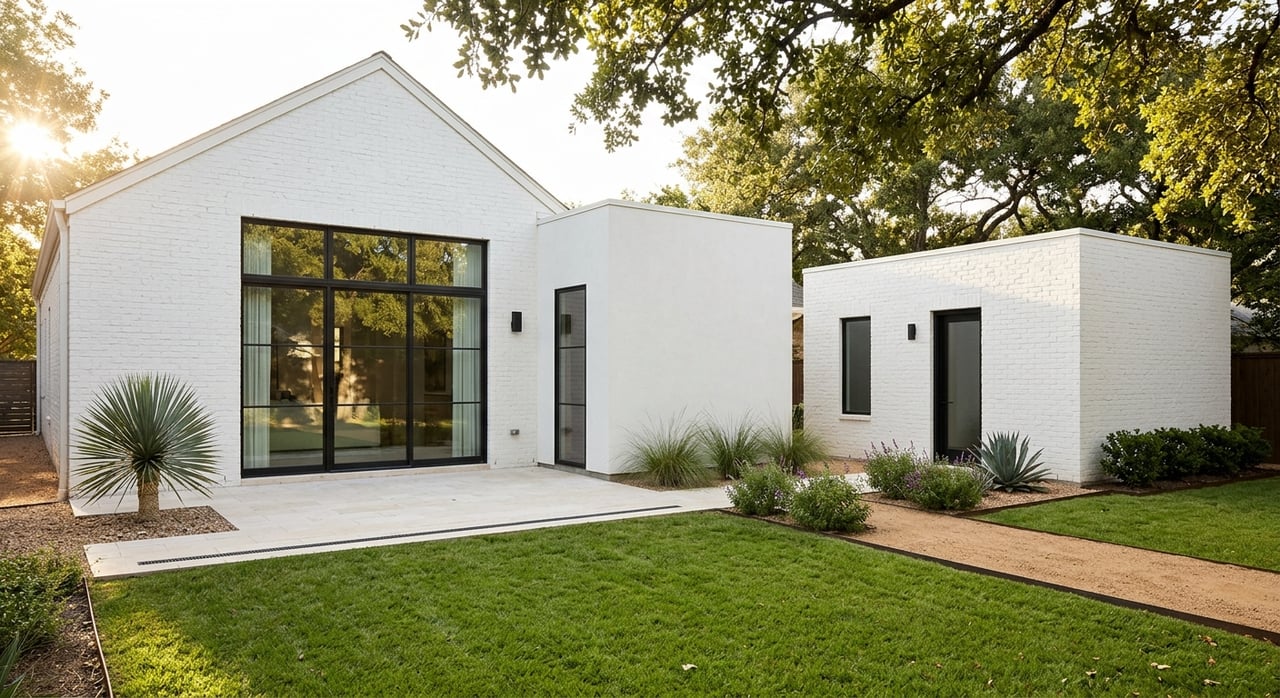
A compliant ADU adds flexibility and a second income stream without giving up the main home’s resale appeal. On SF-3 lots, HOME supports two- and three-unit paths, but plan carefully around impervious cover, tree roots, and utility tie-ins. Owner-occupancy rules eased in some contexts, yet STR licensing still limits short-term uses, so underwrite for long-term rent first. Expect design, permit, and utility costs, plus tree protection measures in your budget.
Build within the envelope: additions and second stories
Well-placed additions and second stories can unlock bedrooms, baths, and view corridors that command premiums. If Subchapter F applies, confirm how floor area counts and how height and massing interact with compatibility triggers. On sloped lots, geotechnical, grading, and drainage design are essential, and some older parcels have pursued modest impervious cover variances when needed.
Small-lot subdivision, thoughtfully
HOME Phase 2 allows a small-lot single-family path in defined cases. In Balcones Park, older, larger lots may appear ripe for a split, but feasibility depends on platting rules, drainage and utility capacity, protected trees, and any deed restrictions. Start with a survey, topographic data, drainage study, and a tree inventory, then test the numbers against entitlement risk.
Interior remodels and systems upgrades
Where trees or slopes make additions complex, interior reconfiguration and system upgrades can deliver strong returns with fewer approvals. Mid-century layouts often benefit from kitchen openings, bath re-stacks, electrical and HVAC modernization, and improved glazing. This path usually avoids impervious cover issues and can be staged to manage cash flow.
Outdoor living that respects the cap
In this hillside setting, outdoors can be the showpiece. Pools, terraces, and retaining walls add lifestyle value, but they also count toward impervious cover and may trigger extra engineering. Keep a running impervious budget and consider pervious paving where it fits the design.
Costs, timelines, and a simple pro forma
- ADU build costs in Austin commonly range from about $125,000 to $350,000+, depending on size, finishes, foundation conditions on slopes, and utility upgrades. For local context and planning considerations, review this ADU cost overview from Maxable.
- Permitting under HOME includes specific guidance for two- and three-unit projects and may provide expedited tracks in some cases. Review the City’s implementation notes and timelines on the HOME amendments page. Plan on weeks to several months from complete submittal to permit, and longer if a Board of Adjustment variance is required.
- Impact fees vary by scope. Many accessory units added to existing homes do not trigger Austin’s Street Impact Fee based on trip thresholds, but you should still budget for standard building permit fees and utility taps or meter upgrades. Confirm early with Austin Water and Austin Energy.
- Improvements typically increase assessed value at TCAD, which affects your tax bill. Travis CAD tracks ADU and urban-core impacts within its studies, so plan for higher assessed value after permitted work. See the appraisal district’s reappraisal planning context in the TCAD reappraisal plan.
Simple framing: If a permitted detached ADU costs $200,000 and rents for $1,800 per month, that is about $21,600 in gross annual income before expenses and debt service. In Balcones Park, customized design and privacy features can support stronger rents, but always use hyperlocal comps when you model your yield.
A focused due diligence checklist
Use this as your pre-offer and option-period playbook:
- Confirm the parcel’s zoning, overlays, and whether it sits inside the Subchapter F boundary. Start with the City’s HOME amendments page and the base-zone site tables in Section 25-2-492.
- Pull the recorded plat, title documents, and any deed restrictions. Private covenants can be more restrictive than city code.
- Order a tree survey and, if protected or heritage trees are present, plan for mitigation or alternate building footprints. The City explains thresholds and process on its Tree Reviews and Permitting page.
- Get a current survey with topography. Check watershed and any floodplain proximity under Section 25-8-372.
- Confirm Austin Water and Austin Energy capacity for added units. Budget for taps, meters, or service upgrades if needed.
- Validate your unit count and minimum lot area under HOME, and model envelope limits against trees and slopes.
- Build an impervious cover budget for driveways, patios, decks, pools, and the ADU footprint. Keep total planned impervious cover at or below about 45 percent unless you are pursuing a variance.
- If short-term rentals are part of your plan, confirm licensing eligibility and caps through the City’s STR program.
- Collect 2 to 3 local general contractor or ADU builder estimates, plus arborist and civil engineering quotes. Add a 10 to 20 percent contingency for hillside or heritage-tree conditions.
Risks and opportunities to weigh
- Risks and constraints: protected or heritage trees, slope and drainage complexity, watershed limitations, private deed restrictions, neighborhood plan tools, and the impervious-cover ceiling. Some parcels require Board of Adjustment relief for modest impervious increases. STR licensing and evolving state ADU preemption efforts require monitoring.
- Opportunities: HOME’s allowances for two to three units and small-lot options, combined with the City’s removal of parking minimums, expand what is possible on many Balcones Park lots. Parcels with flatter buildable pads and fewer protected trees tend to carry lower entitlement risk and better build efficiency.
How Eric helps you execute
You want an advisor who speaks both neighborhood nuance and the development playbook. Eric pairs West Austin market expertise with developer-sales experience to help you target the right lots, stress-test scopes against code, and model resale and rent scenarios with confidence. He also taps Compass tools to optimize outcomes, including pre-list prep through Compass Concierge when it is time to exit. If you prefer discretion or are still shaping your plan, Eric can source private and coming-soon options and connect you with trusted arborists, engineers, and ADU builders.
Ready to explore Balcones Park with a value-add lens or price your current home with future potential in mind? Connect with Eric Grosskopf for a private consultation.
FAQs
What do Austin’s HOME amendments mean for Balcones Park investors?
- HOME allows up to three units on many SF-3 lots and adds a small-lot single-family path in certain cases, opening doors for ADUs, duplex-style layouts, or carefully planned infill on eligible parcels.
How does impervious cover limit pools and driveways in Balcones Park?
- For two- and three-unit projects, plan around roughly 45 percent maximum impervious cover, which means driveways, patios, and pool decks can cap your scope before floor area does.
Are ADUs in Balcones Park eligible for short-term rental use?
- ADUs are subject to Austin’s STR licensing rules and caps, and not every ADU will qualify for the license type you want, so confirm eligibility and plan for long-term rent first.
What are typical ADU costs in Austin right now?
- A wide range is common, from about $125,000 to $350,000 or more based on size, finishes, slope, and utility upgrades, with detached new builds on hillsides at the higher end.
How can I check if a Balcones Park lot is in a McMansion area or has protected trees?
- Ask for the Subchapter F boundary and a current tree survey early in due diligence, and confirm protected or heritage thresholds so your design fits the site without surprises.